
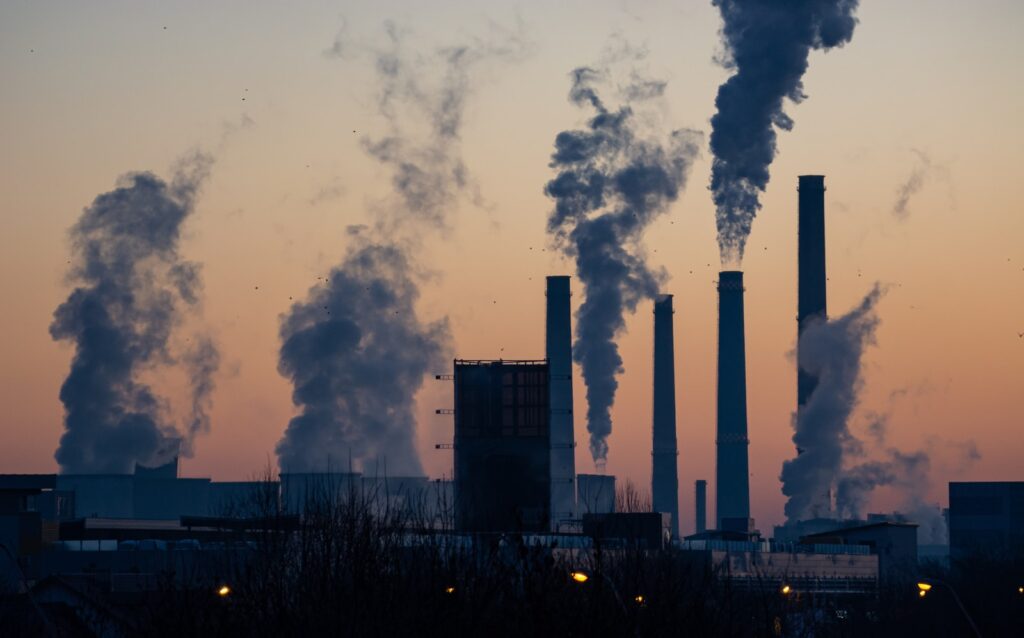
Carbon Dioxide (CO2) is often thought of as an environmental liability (though the trees would disagree); however, it is also a massive, wasted resource. A process called CO2 conversion is essentially taking this waste and turning it into something useful, the chemical equivalent of turning garbage piles into high-grade construction materials.
By taking captured carbon dioxide and chemically transforming it into fuel, plastics, or building materials, we do something far more productive than simply burying it deep underground. This allows us to transform the historic “burn and emit” cycle into a circular carbon economy, where byproducts are recycled back into fuel. Given the increasing availability of CO2 on our little blue planet, this is a target worth hitting.
The good news? Scientists from Yale and the University of Missouri have just announced a breakthrough that looks set to change the game entirely.
The Monopoly of the “Nobles”
Despite our efforts to go green, the global process of carbon conversion has long been held hostage by a small group of “nobles” (isn’t it always the way?). In this case, we’re talking about noble metals, rare, high-status elements like iridium and ruthenium. These metals are prized because they don’t easily react with other chemicals, making them stable but incredibly expensive.
How expensive? Iridium is currently trading at $217.32 per gram, following a massive 33% price spike in the first weeks of 2026 alone. Furthermore, roughly 80–90% of the world’s iridium comes from a single region in South Africa. As any supply chain manager will attest, a single source for anything in demand creates a nightmare for reliability and pricing stability. Any geopolitical disruption in that one region could freeze the world’s CO2 reduction efforts overnight.
The Disruptor: Manganese
Recent efforts to find a “base-metal” alternative have finally made a solid breakthrough. Manganese, an everyday metal that is both cheap and abundant, is the hero of this story. While iridium costs a fortune, manganese is a commodity that costs less than $0.01 per gram. Unlike the iridium monopoly, manganese is mined across multiple continents, including Gabon, Australia, and Brazil.
Until now, scientists couldn’t use manganese because it was too “restless”; it tended to fall apart and clump together under the high pressure required for CO2 conversion. However, the researchers solved this by creating a hemilabile ligand. In basic terms, this acts like a molecular seatbelt that holds the manganese in place while still allowing the chemical reaction to happen. This mechanism makes manganese tough enough to stay stable and act like a “noble” metal.
The Implication: A Massive Price Cut
What this means is a total shift in the cost and reach of carbon conversion. The planet has just been given a massive price cut on a problem it sorely needs to solve.
For years, “green” formic acid (made by fusing hydrogen to CO2) was a niche product because it was so much more expensive to produce than the fossil-fuel version. This breakthrough flips the script:
- The Old Way: Traditional methods using iridium produced formic acid at roughly $790 per ton.
- The New Way: Using manganese in its new “safety chair” drops that price to $490 per ton.
For the first time, green formic acid is price-competitive with “dirty” production methods.
The Hydrogen Connection: A Liquid Battery
This price drop unlocks the potential for formic acid to act as a “Liquid Battery“. By using CO2 as a “sponge” to soak up energy, we create a liquid that is far easier to handle than the alternatives.
Hydrogen gas is often hailed as the future of clean energy, but it is a logistical nightmare, it’s explosive and requires massive, expensive high-pressure tanks to move even small amounts. Formic acid changes that:
- Safer Transport: It is stable at room temperature, has a low explosion hazard, and can be moved using existing gasoline tankers.
- Energy Density: This liquid carries 1.5x more energy than standard high-pressure hydrogen tanks.
- Hyper-Local Production: Because manganese is so cheap, small-scale “capture and convert” operations can be set up directly at the source of CO2, slashing shipping costs and emissions.
The Big “So What?”
We are at a junction where we can finally decouple our environmental survival from scarce, expensive materials. In the past, “going green” was an expensive ideal that struggled with practicality. Now, CO2 is no longer just an environmental liability; it is a useful fuel that we can use to power the planet.
With the process now officially profitable, expect the investments to flow in as fast as the fuel is pumped out.