
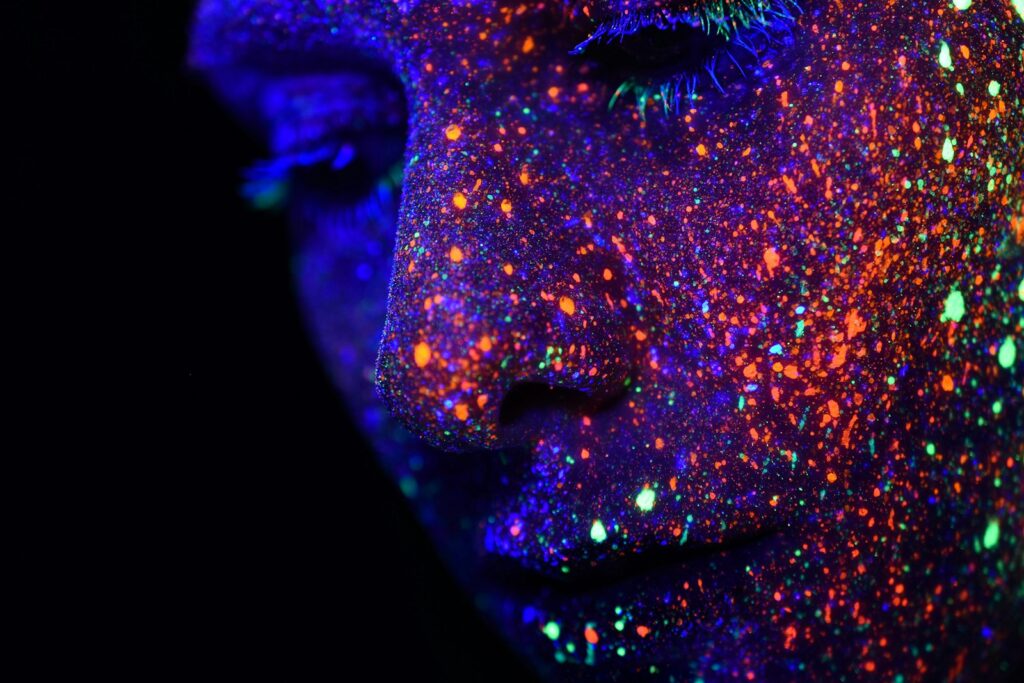
Oh my god, you’re glowing!
Ever heard that said to someone? I have. Never to me though, for some reason…
Well, it turns out you actually do glow, albeit on a level that our eyes cannot detect, so that first statement is clearly a lie. Moving on.
Humans emit light. Actual light.
This isn’t a tie-dye t-shirt and yoga music thing, it’s a physical reality where your body is constantly emitting a dim glow. Now, this light (Ultraweak Photon Emission or UPE), interestingly, is tied to your “life force,” which means, as you may have already guessed, it’s only there whilst you are alive and healthy. When we pass away, that light… well, it goes out. And that is backed by science.
Why do we glow, you may be thinking.
It turns out that our body acts somewhat like a car engine. As our cells burn fuel (oxygen and whatever we had for dinner), light is a byproduct. Now, this burning process isn’t perfect; it can be said that the light is similar to tiny sparks being thrown off, and these “sparks” are the light we can “see”.
The way this is different from, say, a firefly, is that our glow is not a chemical flashlight that turns off and on; it’s more akin to a car engine exhausting gas. Furthermore, this isn’t heat, either. Scientists attempted to replicate the light with dead bodies by heating up dead mice to test if the glow appeared. It did not; they remained “dark”. Whereas heat is invisible infrared energy, this light was visible when using special cameras.
The Science
A study in 2009 mapped this out, and they found two main patterns.
Firstly, your face is the brightest part of you, with the cheeks and mouth emitting much more light than the rest of your body. The theory behind this is that because your face gets more sun, the chemistry of your skin changes, combined with having more blood vessels near the surface.
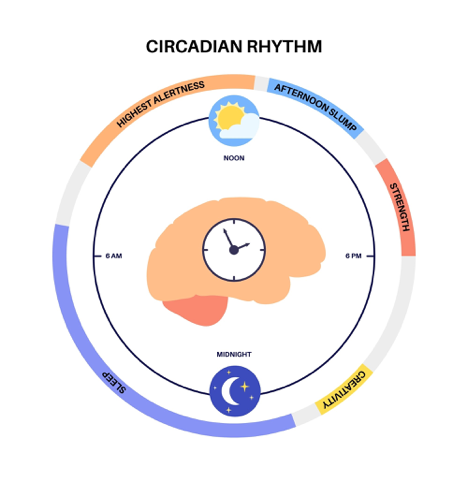
We also have a “brightest time of day.” People are usually “dim” around 10:00 AM, and our peak brightness hits around 4:00 PM. This appears to match the body’s energy cycle, with our levels of light matching when we are at our most awake, burning the most energy.
The Cool Bit
Now, here is where the science identifies something that is both interesting and a bit sad.
A study examined living and dead mice with a camera that could detect this light. What the cameras showed were living mice appearing speckled with light spots with an overall glowing shape. And the dead mice? Darkness.
Actually, they also detected that as the mouse died, the light vanished along with it. This wasn’t some spectral event where a soul departed this spiritual plane for another (or was it?). What happened was the energy was no longer being burned in the body, and the engine simply stopped working.
But wait, there’s more!
When a similar test was conducted on plants, the light shone brighter when the plant was cut. Scientists observed that when cut, the plant “panics” and releases energy to kill bacteria at the wound. Interestingly, for plants, it seems that an injury or stress point is accompanied by an increased level of light, which kind of makes total sense.
So what?
This discovery might lead to further options in the future with some unexpected benefits.
Research is being done to see if cancers can be detected using UPE cameras before they would appear on a CT scan or MRI. We know that cancer cells have a unique metabolism and exhibit something called the “Warburg Effect,” where they consume glucose and oxygen faster than normal cells. Therefore, because UPE (the glow) is caused by metabolism, a hyper-active tumor should theoretically outshine surrounding healthy tissue. Researchers are now looking into the potential to track lymph nodes to see if metabolic changes cause a measurable change in their “brightness”. This might well lead to a “label-free” method of testing that avoids injecting dyes or cutting the patient at all.
Another potential is the measurement of aging that doesn’t involve a daily grunt in the mirror each morning. Aging is widely linked to the “Free Radical Theory”. Essentially, as we get older, our cells get worse at handling oxygen, leading to more “leaks” (free radicals) that damage our DNA. Therefore, since the glow is the light from those leaks, measuring the glow is effectively measuring how fast you are aging on the inside.
Dermatologists are looking at this as a way to measure your “oxidative age” (how biologically old your skin is) versus your “chronological age” (how many birthdays you’ve had). This could lead to some patients being prescribed anti-oxidant supplements or dietary adjustments, followed up with measurements of our skin’s glow to track improvements.
Ultimately, these are potential uses of the discovery that we all glow, but they are still not fully developed as of today. However, the research does show promise on both counts, and we could one day live in a world where the words “you’re glowing” are a medical diagnosis, not just a compliment between two overly enthusiastic friends in a café.
Perhaps we might also learn more about the nature of living beings and their glow that shines a light (yes, I did) on new, even more amazing scientific discoveries.
Until then, I hope this somewhat illuminated you all (yes, I did again).