
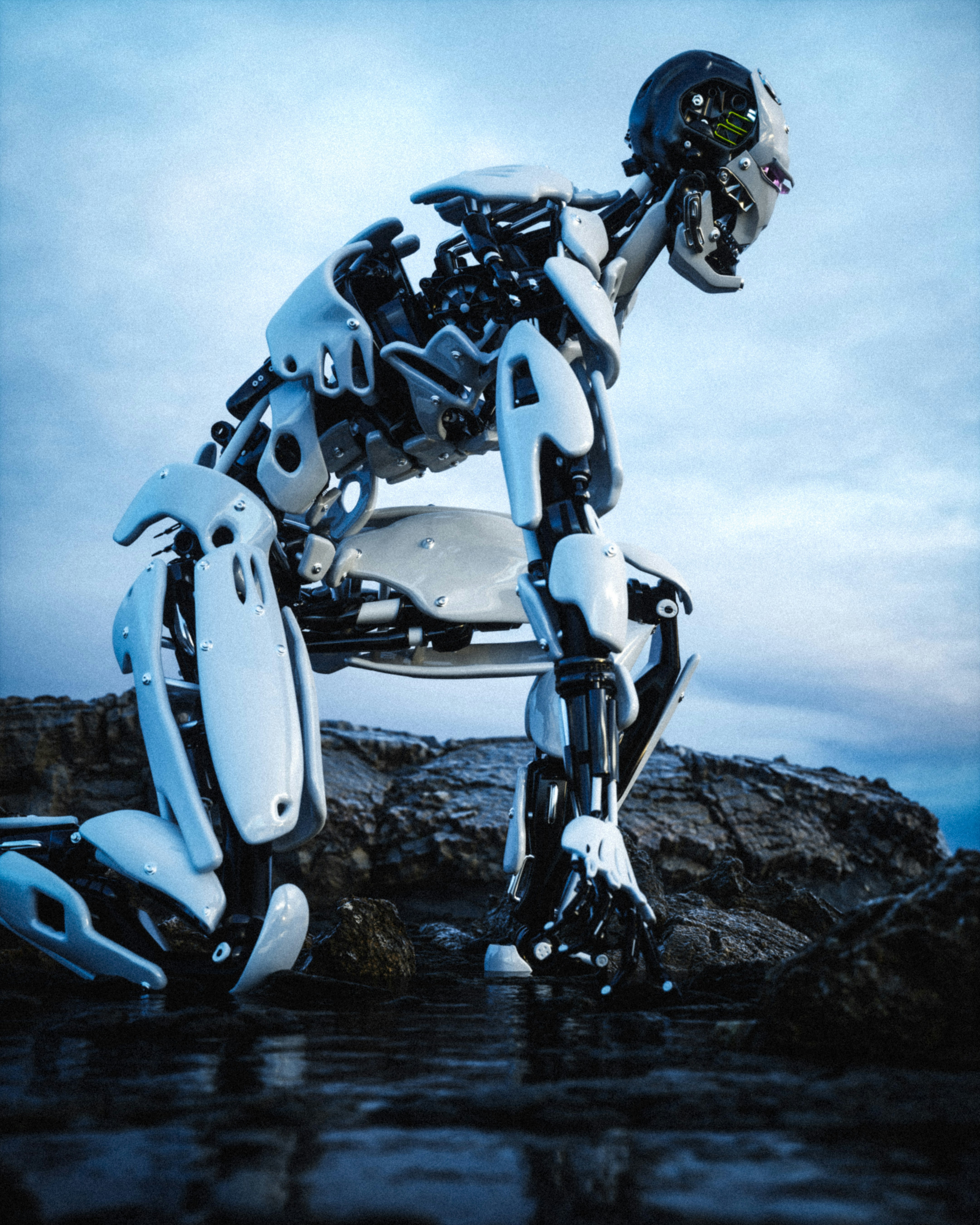
If cheap labour is available anywhere, what exactly is left for countries that built their entire pitch around having lots of it. That question is starting to hang in the air, because humanoid robots are no longer a cosplay demo on a stage. They are edging toward being deployable labour. Deployable means they show up in the spreadsheet.
Enter Optimus.
Tesla introduced the idea at AI Day in 2021 with the usual Musk energy and a spec sheet that sounded almost deliberately underwhelming. Five foot eight. One hundred and twenty five pounds. Five miles per hour. Wired captured that early moment pretty cleanly, including the “if you can run faster than that you’ll be fine” joke, which is funny until you realise the punchline is “it doesn’t need to be fast to replace you”. Wired
People dismissed it because they have learned to treat Tesla timelines like weather forecasts. Useful for vibes. Dangerous for planning.
Then Tesla wheeled a real prototype out at AI Day 2022. It walked. It waved. It did the awkward shuffle that every new biped seems to do in public like it knows it’s being judged. The Verge’s coverage is a decent reminder that Tesla moved from “guy in a suit” to “robot on stage” in one year. prototype
That is the surface story. The deeper story is the labour geography shift.
Tesla’s own description of the goal is blunt. A general purpose bipedal autonomous robot that handles “unsafe, repetitive or boring tasks”. That target list is not science fiction. It is a large slice of manufacturing and logistics. It also extends into elder care, cleaning, basic domestic support, and all the grey area work people pretend they respect while paying as little as possible for it. unsafe
A robot like this changes two things that corporations care about more than speeches.
Cost and control.
The robot does not join a union. The robot does not quit. The robot does not get injured and sue you. The robot does not need visas. The robot does not move across the world for a better wage. It runs on electricity, parts, updates, and whatever pricing model the manufacturer decides to impose once customers are hooked.
That last bit matters. Hardware is rarely the business. The lock in is.
Now zoom out to the countries that have been exporting labour as a competitive advantage.
Vietnam, India, Indonesia, parts of China’s manufacturing heartland, all the economies that grew by offering cheap hands at scale. The advantage erodes when the hands are optional. The offshoring logic changes when automation makes labour cost less relevant to where production sits. The OECD has been pointing at this relationship for years in its work on robotics and how it reshapes the organisation of production across global value chains. robotics
This does not mean every factory snaps back to Europe or the US overnight. Production does not move like a light switch. Supply chains have inertia. Skills, components, energy costs, regulations, and capital access still bite. The direction still shifts when labour is no longer the dominant input.
Humanoid robots make the shift feel more general purpose. Industrial robots already replaced huge chunks of repetitive factory work. Humanoids aim at the messy environments that were hard to automate because they were built around human bodies. Stairs. Doorways. Tools. Random objects. Improvised tasks. “Go pick that up” as an instruction.
That is the scary part. Factories can be redesigned for robots. Homes already exist. If a machine can operate in both, the addressable market explodes.
Musk keeps floating consumer ownership and price ranges. The number changes depending on the year and the mood, and it will not be “cheap” in the way people hope it will be cheap. It will be cheap in the way smartphones were cheap once the dependency formed and the subscription layer got bolted on top.
The moral questions arrive late, like they always do. People celebrate the end of menial toil. People also discover that ending menial toil does not automatically create dignified lives for the workers who used to do it. A robot replacing a job does not come with a built in replacement income. That part is policy, and policy moves at the speed of committees.
Optimus is not the only humanoid project on Earth. It is the one attached to a company that already knows how to manufacture at scale, already knows how to build supply chains, and already thinks in terms of software stacks that improve through data.
That combination is why labour rich economies should be paying attention. The export is not “cheap labour” anymore. The export becomes energy, capital, stability, IP, and the ability to attract and retain high value manufacturing ecosystems. Cheap labour stops being the centre of the pitch.
Optimus is coming in some form. It shows up first where the work is dull and the turnover is high. It spreads when the unit economics click. It accelerates when competitors do the same thing and nobody wants to be the last firm paying humans to lift boxes.
Subscribe below if you want more of this. I’ll keep watching the robots clock in while we keep pretending the old labour model is still on the rota.